
Poland
Poland: Warsaw, Auschwitz and Krakow in 6 days
6 days · 5 nightsDepartures Saturday · Next: Dec 12From, per person
in a double roomUS$1,375
Warsaw → Czestochowa → Auschwitz-Birkenau → Krakow → Wroclaw → Poznan → Torun → Malbork → Sopot → Gdansk → Giżycko → Masuria → Warsaw
Automatically translated from Spanish. View the Spanish original
Minimum 2 travelers. Ask us for single-traveler prices.
Estimated price, subject to availability. We reply within one business day.
Questions? Call us at +1 (888) 477-8669
After the guided tour of Warsaw you attend a piano recital of works by Chopin. On the way south you make a brief stop at the Black Madonna of Czestochowa and tour Auschwitz-Birkenau with a local guide. In Torun you see Copernicus's birthplace, and in Malbork you enter the Teutonic Castle and the Amber Museum. In Gdansk you take a 45-minute boat trip around the harbor. The extension adds the Wolf's Lair and, from Gizycko, a boat on the Masurian lakes; if the weather prevents sailing, a museum is offered.
Arrival in Warsaw. Transfer to the hotel (without assistance). Overnight.
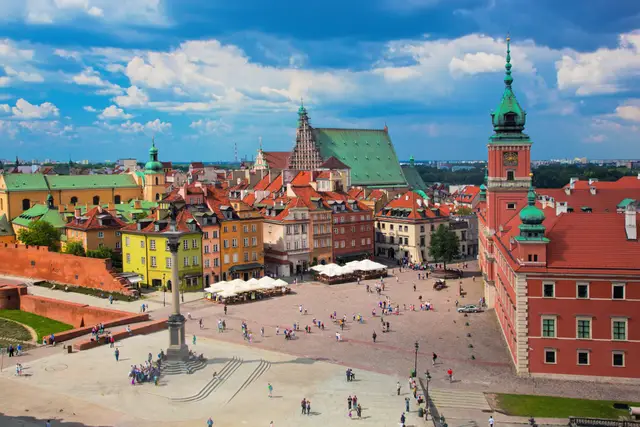
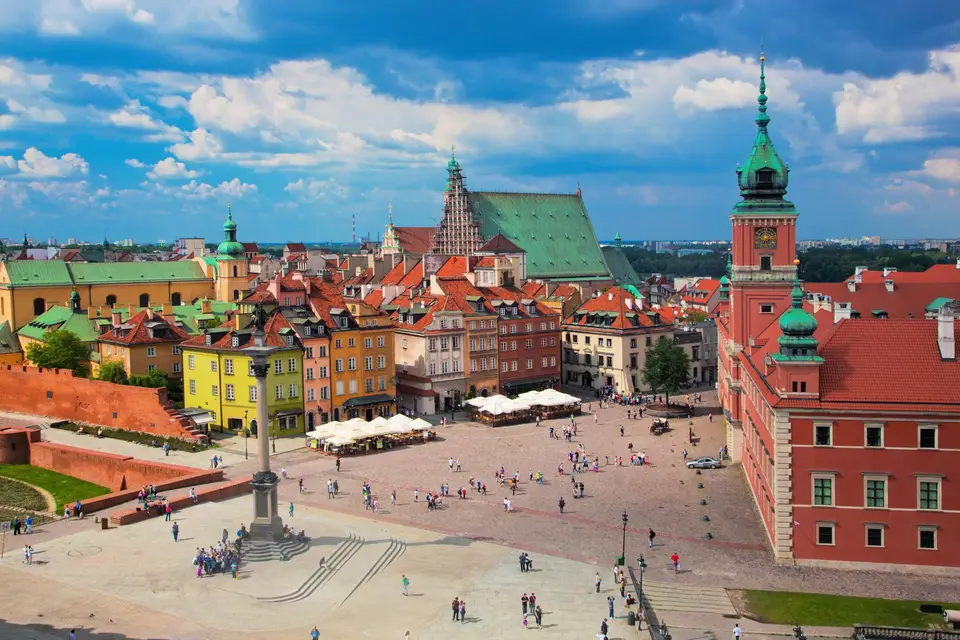
Breakfast. City tour. We will begin with the Palace of Culture and Science, the tallest building in the city, built in the socialist realist (Stalinist) architectural style; we will visit the Royal Łazienki Gardens, the most important and distinguished park in the Polish capital, with the monument to Frédéric Chopin. We will see the places of martyrdom during the Nazi German occupation, the area of the former Ghetto, the Monument to the Ghetto Heroes and the Umschlagplatz, the place from which the Jews were deported. We continue with the Royal Route, the University, the Presidential Palace, the Royal Castle, Sigismund's Column, the Market Square, the walls of the Barbican, Marie Curie's house and the Warsaw Uprising Monument. Free time. In the afternoon, piano recital in Warsaw. Dinner and overnight.
Breakfast. Departure for Czestochowa, with a brief stop to see the image of the Black Madonna (no guided tour). Continue to Oświęcim to visit Auschwitz-Birkenau, guided tour of the museum of the former Nazi German concentration camp, a UNESCO World Heritage Site and a place of martyrdom of humanity. Continue to Krakow. Dinner at a folk restaurant. Overnight.
Breakfast. City tour: the old town, a UNESCO World Heritage Site; we will go up Wawel Hill, where we will see Wawel Castle (courtyard) and the Cathedral (exterior). Walk through the old town, along Kanonicza and Grodzka streets, with a brief stop at the Collegium Maius (courtyard), St. Florian's Gate and the Cloth Hall, and visit to St. Mary's Basilica, with its majestic altarpiece by Veit Stoss. Time to hear the trumpeter. Lunch. Free afternoon; you can take optional excursions, such as the Wieliczka Salt Mine, a UNESCO World Heritage Site excavated in the second half of the 13th century, and a walk through the Jewish Quarter of Kazimierz. Or visit the exhibition with Da Vinci's painting “Lady with an Ermine”, or visit Schindler's Factory. Overnight.
Breakfast and departure for Wroclaw. Lunch. City tour: the University (exterior), the Main Square, the Hansel and Gretel houses and the dwarfs, the Town Hall and the Flower Square. We will continue our walk across the bridges over the canals of the Oder River to Ostrów Tumski island and visit the Cathedral of St. John the Baptist. Remaining time at leisure. Optionally, you can take a boat ride under the bridges and through the canals of the Oder River. Overnight.
Breakfast and departure for Poznan. Panoramic tour of the city. We will see the billy goats on the Town Hall, the city's old town, the Old Market Square, the Museum of Decorative Arts, the fountains of Mars and Apollo, the Fara Church (interior), Freedom Square and the castle (exterior). Continue to Torun, a UNESCO World Heritage Site and the birthplace of the astronomer Copernicus. Arrival and guided tour of the city, a gem of Polish Gothic architecture. We will see the house where the Polish astronomer Nicolaus Copernicus was born, the Town Hall, the Vistula riverbed, Artus Court, the University and the city walls. We recommend the gingerbread (Copernicus pierniki). Dinner and overnight.
Breakfast and free morning. Journey to the Tricity. Stop in Malbork. Visit to the Teutonic Castle of Malbork, the invincible capital of the knights of the Teutonic Order. Today it is a museum. The knights were the last Order to take part in the Crusades. They were invited to Polish lands in 1226 by the Polish duke Konrad of Masovia to Christianize the pagan peoples of Livonia, Pomerania and Masuria. They built a network of castle-fortresses in northeastern Poland. The largest is Malbork, which was the capital until the 16th century, a castle that was never conquered. Visit to the High and Middle Castles and the Amber Museum in Malbork. Lunch. Journey to the Baltic Sea, to Gdansk. On the way we will stop in Sopot, where we will take a walk along the Baltic Sea beach and the Monte Cassino promenade. Time to rest and visit on your own the longest wooden pier in Europe. Arrival in Gdansk. Overnight.
Breakfast, panoramic tour of the city: Mariacka Street, the Barbican, the Golden Gate, the Green Gate, the Town Hall, Neptune's Fountain and admission to the Gothic St. Mary's Church, the largest brick church in Europe; a stroll along Mariacka Street, known as Amber Street; we will see the exterior of the old medieval Crane and stroll along the Motława River promenade. Boat ride around the port of Gdansk with a panoramic view of the famous Gdansk Shipyard and the Westerplatte peninsula out to the bay on the Baltic Sea (45 min). Free time. Lunch. Optionally, you can attend an organ concert at Oliwa Cathedral, visit the communist-era neighborhoods, the shipyards and Lech Wałęsa's house, and visit the Museum of the Second World War. Optionally, you can return to Warsaw by Pendolino (high-speed) train, 2nd class, approx. 3 hours, without assistance. Overnight.
After breakfast, we will travel to the region of 1,000 lakes, called Masuria (until 1945 called Ostpreussen, East Prussia). On the way to Masuria we will stop in Gierłoż to visit Hitler's headquarters, the complex of 80 bunkers built by the Nazis in 1941 on marshland. They were part of a complex of military bases that served as German army headquarters during WWII. The Wolfsschanze was protected and camouflaged in various ways, with more than 54,000 mines of different types. Here, in 1944, the assassination attempt on Hitler took place, Operation Valkyrie, organized by Claus Schenk von Stauffenberg with the support of part of the Nazi high command, as shown in the film Valkyrie. Continue to Giżycko, known as the sailing capital. We will take a boat ride (1 hour) on Lakes Niegocin and Tajty, also passing through the canals. Lunch at a regional restaurant. Return to Warsaw. Arrival and overnight.
Breakfast, transfer to the airport (without assistance). End of our services.
1 departure in Jan 2027, US$2,395 per person in a double room.
Choose a date to request it.